Fixing Snapped Fence Post A Comprehensive Guide
Fix snapped fence post – Fixing snapped fence post is a common DIY challenge. This comprehensive guide will walk you through identifying the damage, assessing the situation, and implementing the appropriate repair methods, from simple fixes to complete replacements. Understanding the causes of fence post breakage is crucial to preventing future damage.
The guide covers various scenarios, including different types of damage (from slightly bent to completely severed), various materials (wood, metal, composite), and diverse repair methods (using epoxy, reinforcement, or replacement). It also details crucial post-repair considerations, like proper placement, soil conditions, and bracing. Ultimately, the guide aims to equip you with the knowledge and steps needed to successfully tackle this project.
Identifying the Damage
A snapped fence post presents a range of damage scenarios, from minor to severe. Proper identification is crucial for selecting the appropriate repair method and ensuring a durable and aesthetically pleasing result. Understanding the various types of damage and their potential causes will help homeowners effectively address the issue.
Damage to fence posts can result from a multitude of factors, ranging from gradual deterioration due to weather conditions to sudden impacts from external forces. Identifying the cause of the breakage allows for proactive measures to prevent future incidents and ensures a more robust and long-lasting fence.
Types of Snapped Fence Post Damage
Different levels of breakage affect the repair process and the structural integrity of the fence. Understanding these distinctions is critical to choosing the most appropriate repair strategy.
- Slightly Bent: The post may exhibit a noticeable bend without a complete break. This is often the result of gradual stress over time, such as settling or uneven ground pressure. Repairs often involve straightening the post and securing it with additional supports.
- Partially Broken: A portion of the post has fractured, but a significant portion of the post remains intact. This type of damage is frequently caused by impacts, like vehicles or heavy equipment striking the post. Repair typically involves reinforcing the broken section with metal supports or replacement of the damaged portion.
- Completely Severed: The post has broken into two or more distinct pieces. This can be due to a variety of causes, including extreme weather events (like high winds or heavy snow), impacts from falling objects, or even animal digging. Repair often necessitates complete replacement of the post.
Causes of Fence Post Breakage
A thorough understanding of the causes of fence post breakage aids in preventing future incidents and improving the long-term stability of the fence.
- Ground Conditions: Uneven or unstable soil can cause gradual settling, leading to stress and eventual breakage. This is particularly true in areas with high water tables or clay-based soils. Consider soil testing if you suspect uneven settlement.
- Impact Damage: Vehicles, heavy equipment, or falling objects can inflict immediate damage, resulting in a snapped post. Inspect the area for potential impact points to determine the source of the breakage.
- Weather Conditions: Prolonged exposure to extreme weather conditions, such as strong winds or heavy snowfall, can exert considerable force on fence posts, potentially causing them to snap. Incorporating weather-resistant materials into the design can help reduce the risk of future breakage.
- Poor Installation: Insufficient anchoring during installation can make the post susceptible to breakage from external forces. Ensure proper installation techniques are used, including proper post depth and appropriate anchoring methods.
- Rot and Decay: Gradual deterioration of the post material due to rot or decay weakens the structure, making it prone to snapping under stress. Regular inspection and timely maintenance can help prevent this.
Signs of a Snapped Fence Post Requiring Repair
Recognizing the tell-tale signs of a damaged fence post allows for prompt action and prevents further deterioration.
- Visual Inspection: A visible crack, bend, or break in the post is an obvious sign of damage. Careful observation of the entire fence line can help detect subtle signs of damage.
- Uneven Fence Line: A sagging or leaning fence post can indicate underlying damage or weakness. This is especially important in areas prone to settling or impact.
- Post Movement: If the post appears to move or shift when touched, it likely requires immediate attention. Movement indicates instability, which can lead to further breakage.
Severity Comparison Table
This table Artikels the severity of different snapping scenarios, aiding in assessing the necessary repair action.
| Damage Type | Description | Severity | Repair Action |
|---|---|---|---|
| Slightly Bent | Post exhibits a noticeable bend without a complete break. | Low | Straighten and secure with additional supports. |
| Partially Broken | A portion of the post has fractured, but a significant portion remains intact. | Medium | Reinforce broken section with metal supports or replace the damaged portion. |
| Completely Severed | The post has broken into two or more distinct pieces. | High | Complete replacement of the post is usually necessary. |
Assessing the Situation
Before embarking on a fence post repair, a careful assessment is crucial. This involves a safe inspection of the damage, considering factors like the post’s material, the surrounding environment, and your available resources. A thorough evaluation will guide you towards the most effective and economical repair method.
Safe Inspection Procedures
A safe inspection prioritizes your well-being. Begin by ensuring the area is clear of obstructions and potential hazards. Use appropriate safety gear, including sturdy footwear, gloves, and eye protection. Assess the snapped post for any signs of rot or insect damage, which could compromise the stability of the repair. Check the ground surrounding the post for any loose or unstable soil. If necessary, use tools like a shovel to carefully expose the base of the post to assess its full condition. A thorough examination is vital for a successful and long-lasting repair.
Factors Influencing Repair Method Selection
Several factors influence the choice of repair method. Budget limitations often dictate the scope and type of repair possible. Time constraints can narrow the selection of available methods. Your skill level and experience play a significant role in determining the complexity of the repair. For instance, a simple snap might be easily fixable with basic tools, while a more extensive problem might require professional help.
Comparison of Fence Post Materials
Different materials offer varying advantages and disadvantages in fence post construction. The longevity, cost-effectiveness, and ease of maintenance of each material contribute to its suitability for specific applications.
Fence Post Material Comparison Table
| Material | Advantages | Disadvantages |
|---|---|---|
| Wood | Relatively inexpensive, readily available, and easy to work with. | Susceptible to rot, insect damage, and weather degradation, requiring regular maintenance. Can be prone to splitting. |
| Metal (e.g., steel, aluminum) | Durable, resistant to rot and insects, and long-lasting. Provides excellent structural support. | Can be more expensive than wood, installation might require specialized tools, and can be heavy. |
| Composite | Durable and weather-resistant, requiring minimal maintenance. Offers a balance between wood and metal in terms of cost and longevity. | Can be more expensive than wood, but less expensive than metal. Installation might require specialized knowledge. |
Required Tools and Materials
The specific tools needed for a fence post repair depend on the chosen method and the material of the post. For wood posts, basic tools like a hammer, saw, and screwdriver might suffice. Metal posts may require specialized tools like a drill, wrench, and possibly welding equipment. Composite posts often necessitate tools suitable for working with the specific composite material.
Repairing the Post
Repairing a snapped fence post requires careful assessment of the damage and selection of the appropriate repair method. Factors like the type of wood, the extent of the break, and the desired longevity of the repair all play a crucial role in determining the best course of action. Different methods offer varying levels of strength, durability, and cost-effectiveness.
Several approaches can successfully address a snapped fence post, from simple repairs to complete replacements. The chosen method depends on the severity of the damage, the resources available, and the desired aesthetic outcome.
Methods for Repairing a Snapped Wooden Post
Various methods can repair a snapped wooden post, each with its own advantages and disadvantages. Understanding these methods will allow you to choose the best option for your specific situation.
- Epoxy Repair: This method involves using epoxy resin to bond the broken sections of the post together. Epoxy is a strong adhesive, capable of providing a durable repair. This method is particularly useful for clean breaks where the wood pieces align well. The process typically involves cleaning the broken surfaces, applying epoxy, and clamping the pieces together for proper curing. This approach can be effective in repairing small to moderate breaks, but larger breaks may require additional reinforcement.
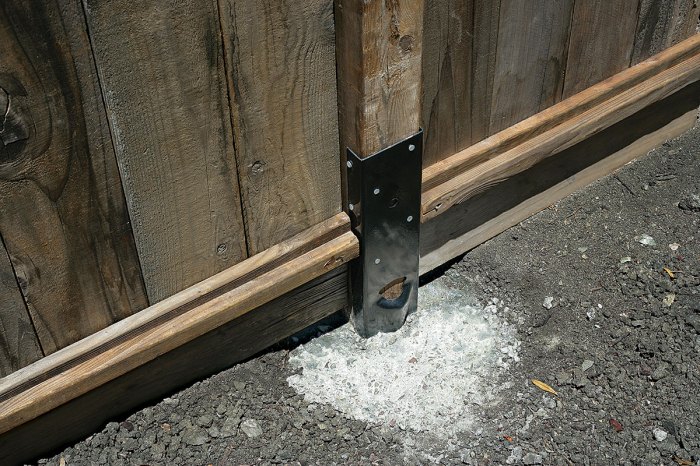
- Reinforcement with Metal Brackets: Metal brackets provide additional support to the post, particularly for larger breaks. This method is suitable for posts that have experienced significant damage and require substantial reinforcement. A strong metal bracket can stabilize the post and help prevent future cracking or snapping. This method often involves drilling holes into the post for the bracket attachment. The brackets are then secured using appropriate fasteners, such as bolts or screws.
- Replacement with a New Post: In cases of severe damage or if the post is old or rotten, replacing the entire post may be the most cost-effective and long-term solution. This involves removing the damaged post, excavating the post hole, and installing a new post. New posts are often treated to resist rot and decay, increasing their lifespan.
Repairing a Snapped Wooden Post Using Epoxy
This method requires careful preparation and precise execution to achieve a strong and lasting repair.
- Preparation: Clean the broken surfaces of the post thoroughly to remove any debris or loose wood. Ensure the surfaces are free of dirt and moisture. A sharp chisel can help to remove splinters and ensure clean surfaces for better epoxy adhesion.
- Epoxy Application: Apply epoxy resin to the broken surfaces, ensuring complete coverage. Follow the manufacturer’s instructions for mixing and application. Apply in a thin, even layer.
- Clamping: Carefully align the broken pieces of the post. Use strong clamps to hold the pieces together firmly. This ensures that the epoxy bonds properly. The clamping time should be in accordance with the epoxy’s curing time.
- Curing: Allow the epoxy to cure completely according to the manufacturer’s instructions. This typically takes several hours or days, depending on the type of epoxy used. Avoid moving or stressing the post during the curing period.
Reinforcing a Snapped Post with Metal Brackets
Metal brackets can provide crucial support for a weakened post.
- Bracket Selection: Choose brackets that are strong enough to support the weight of the fence and the expected stresses on the post. Consider the dimensions of the post and the extent of the damage when selecting the appropriate bracket size.
- Drilling Holes: Drill pilot holes in the post at the designated locations for the bracket screws. This prevents the wood from splitting and ensures a clean and precise installation.
- Bracket Installation: Attach the brackets to the post using appropriate fasteners. Ensure the brackets are securely fastened to prevent slippage or movement.
- Reinforcement: Use additional reinforcement materials, such as wood shims or metal plates, if necessary to provide additional support.
Installing a Replacement Post
Replacing a snapped fence post requires careful excavation and precise installation.
- Excavation: Carefully dig out the old post hole. The hole should be of sufficient depth and width to accommodate the new post.
- Post Placement: Carefully position the new post in the hole. Ensure the post is centered and plumb. Consider using a level to ensure the post is vertical.
- Backfilling: Fill the hole around the new post with appropriate soil or gravel. Compact the soil firmly to prevent settling.
- Finishing: Apply any necessary sealant or paint to protect the new post from moisture and decay. Secure the fence to the new post.
Comparison of Repair Methods
| Method | Cost | Time | Difficulty |
|---|---|---|---|
| Epoxy Repair | Low | Medium | Medium |
| Reinforcement with Brackets | Medium | Medium | Medium-High |
| Replacement | High | High | High |
Post-Repair Considerations
Completing the fence post repair is a significant step, but proper post-repair considerations are equally important to ensure long-term stability and prevent future damage. These considerations focus on the environment around the post, the materials used, and the overall integrity of the structure.
Careful attention to these details will maximize the longevity of the repaired fence post and surrounding area. This section details crucial aspects for post-repair maintenance, including placement, soil conditions, safety precautions, and preventative measures.
Proper Post Placement and Depth
Proper post placement and depth are essential for a stable fence. The post should be positioned directly in line with the existing fence line and plumb, meaning it stands vertically. Incorrect placement can lead to uneven tension across the entire fence, potentially causing future damage. Ensuring the post is positioned correctly at the proper depth minimizes stress points and strengthens the entire structure. A depth of at least 30-40 inches below ground level is typically recommended, though the precise depth may vary based on soil conditions and local building codes.
Appropriate Soil Conditions Around the Post
The soil surrounding the post significantly influences its stability. Compacted or poorly draining soil can lead to settling and movement of the post over time. A crucial consideration is the soil’s ability to retain moisture, which helps to prevent the post from drying out and shrinking.
To ensure appropriate soil conditions, consider the following:
- Soil Compaction: Compaction of soil around the post should be avoided. If necessary, compacting the soil should be done gently to prevent further shifting. Consider the use of a post-hole digger to maintain soil structure. For example, a deep hole that is well-packed but not compacted with excessive force is more stable than a shallow hole with a large compacted soil base.
- Soil Drainage: Good drainage is vital. Water pooling around the post can lead to soil erosion and instability. Improving drainage around the post will prevent water damage.
- Soil Type: Different soil types react differently to moisture. Sandy soils may require more consideration for moisture retention than clay soils. Adjusting the soil type is sometimes necessary to improve the structural stability of the post.
Precautions When Working with Tools and Materials
Safety is paramount during any repair work. Using appropriate safety equipment and adhering to safety protocols is crucial to prevent injuries.
- Tool Safety: Use tools appropriate for the task and ensure they are in good working order. Always wear safety glasses, gloves, and appropriate footwear. Proper tool maintenance reduces the risk of accidents. Never use a tool beyond its intended capacity. For instance, using a smaller shovel for a large excavation can lead to improper digging and potentially damage the surrounding soil structure.
- Material Handling: Carefully handle materials, especially heavy ones, to prevent injury. Use proper lifting techniques and consider assistance when necessary. Material handling protocols will avoid accidental drops or spills that could harm individuals and potentially damage property. For example, using a pallet jack to move heavy fence posts is more efficient and safer than manually lifting them.
Proper Post Bracing and Securing
Post bracing and securing are critical for long-term stability. The bracing method should prevent the post from shifting or leaning.
- Bracing Methods: Use appropriate bracing methods, such as metal braces, concrete footings, or other approved methods. These methods should be strong enough to support the post’s weight and prevent movement. Selecting the appropriate bracing method depends on the type of fence, post, and soil conditions.
- Securing Methods: Secure the post with appropriate fasteners, ensuring they are properly installed and sized. Proper fasteners will ensure the post is stable and will not move or shift over time.
Preventing Future Damage to the Fence Post
Preventing future damage to the fence post is crucial for the fence’s longevity. Regular inspection and maintenance can help identify potential issues early.
- Regular Inspections: Regularly inspect the post and surrounding soil for signs of damage, such as cracks, leaning, or settling. Regular inspections will help to identify potential problems early, and corrective measures can be taken before significant damage occurs.
- Weatherproofing: Protecting the post from the elements can extend its lifespan. Consider using preservatives or weather-resistant coatings to minimize the impact of moisture, sun exposure, or other environmental factors.
Alternative Solutions
A snapped fence post presents several fixable options beyond simple repair. Choosing the right solution depends on the extent of damage, the type of fence, and the desired long-term durability. A complete replacement might be necessary in some cases, offering a more permanent solution compared to temporary repairs.
Beyond basic repairs, alternative solutions provide diverse approaches for maintaining a functional and aesthetically pleasing fence. These range from replacing the damaged post to exploring more involved replacements or professional services. Understanding these options allows for informed decision-making in maintaining or upgrading a fence.
Replacement Options
Replacing a snapped fence post often proves a more robust and lasting solution. Different materials and installation methods influence the cost and time commitment. Selecting the appropriate replacement method ensures a strong and enduring fence structure.
- Replacing the Entire Post: This method involves removing the broken post and installing a new one. This is generally the most effective solution for significant damage or when the remaining portion of the post is structurally compromised. This approach provides a complete restoration of the fence section, ensuring the post’s structural integrity and longevity. For example, if a post is deeply embedded in the ground, removing the old one and installing a new one could be more efficient than attempting to repair the broken one.
- Using Different Post Materials: Options for replacement posts include pressure-treated wood, metal (like steel or aluminum), or composite materials. Each material possesses unique properties affecting cost and durability. Pressure-treated wood, for example, offers moderate cost-effectiveness and durability against rot and decay, making it a popular choice for many residential fences. Metal posts, on the other hand, are resistant to weathering and can endure harsh conditions, offering a more enduring alternative for certain climates. Composite materials provide a balance of cost, durability, and low maintenance, offering an excellent choice in situations where longevity is a top priority.
Removing a Broken Post
Careful removal of a broken fence post is critical to prevent further damage. Proper technique avoids injury and ensures a smooth installation of the replacement. This process is crucial for successful replacement and should be undertaken with caution.
- Assess the Situation: Carefully examine the broken post’s condition. Determine if the broken section is still embedded in the ground or if it’s mostly detached. This initial assessment helps determine the best removal approach. A broken post that’s partially in the ground will require different removal techniques than one that is entirely free.
- Tools and Equipment: Gather necessary tools, including a post hole digger, shovel, pry bar, and possibly a chain saw or reciprocating saw. The type of tools required will depend on the size and type of post, as well as the extent of damage. The proper tools will streamline the removal process.
- Removing the Post: Carefully dig around the base of the post to loosen the soil. If the post is firmly embedded, use a post hole digger or a post-hole auger to excavate around it. Use a pry bar to lever the broken post out of the ground if it’s only partially buried. If the post is significantly damaged, a chain saw or reciprocating saw may be necessary to cut the post into manageable pieces for removal.
Obtaining New Fence Posts
Acquiring new fence posts is essential for replacement. Several sources offer various options. These include local home improvement stores, lumber yards, and online retailers. The selection of new posts depends on the required size, material, and budget.
- Local Home Improvement Stores: These stores often have a wide selection of pressure-treated wood posts, metal posts, and other options, readily available for purchase. Many stores also offer delivery and installation services, simplifying the process further.
- Lumber Yards: Lumber yards typically offer a more extensive range of wood post sizes and types. These suppliers often provide customized options and may offer discounts on bulk purchases. The potential for finding specialized wood types is a key advantage of dealing with lumber yards.
- Online Retailers: Online retailers provide a convenient option for ordering fence posts, particularly if specific materials or sizes are needed. Shipping times vary based on the retailer and location, but online ordering can provide an easy way to procure specialized posts.
Local Fence Repair Services
Local fence repair services can provide comprehensive solutions for fence post replacement. They offer specialized expertise, tools, and experience, making them valuable for complex repairs. Professional services can be a significant advantage in situations requiring specialized knowledge or advanced tools.
- Online Search Engines: Using search engines like Google or Bing, searching for “fence repair near me” can yield a list of local contractors or businesses. This allows for quick identification of potential providers.
- Local Business Directories: Consult local business directories or online yellow pages for listings of fence repair services in your area. These resources can provide contact information and details for different providers.
- Recommendations: Asking for recommendations from neighbors, friends, or family members who have recently had fence work done can provide insights into reliable and reputable local services. Referrals can help find qualified and trustworthy service providers.
Replacement Options Table
| Replacement Option | Estimated Cost | Estimated Time (days) |
|---|---|---|
| Pressure-treated wood post (standard size) | $50-$150 | 1-2 |
| Metal post (standard size) | $100-$300 | 1-3 |
| Composite post (standard size) | $150-$400 | 1-3 |
| Professional Installation (complex situation) | $300-$1000+ | 2-7+ |
Note: Costs and times are estimates and may vary based on specific circumstances, location, and labor costs.
Prevention Strategies
Source: com.au
Preventing fence post failures involves proactive measures to address the common causes of damage. By understanding these causes and implementing appropriate reinforcement techniques, homeowners can significantly extend the lifespan of their fences and avoid costly repairs. This proactive approach saves time, money, and frustration in the long run.
Effective prevention strategies are crucial for maintaining the structural integrity and aesthetic appeal of fences. Addressing potential problems before they occur minimizes the risk of costly repairs and ensures the longevity of the fence. A well-maintained fence is a testament to sound planning and preventative care.
Common Causes of Fence Post Failure
Several factors contribute to fence post failure. These include soil conditions, improper installation, inadequate post supports, and environmental stressors. Understanding these factors allows for targeted preventative measures. Poor soil conditions, such as shifting soil or inadequate compaction, can lead to post instability. Likewise, insufficient anchoring and inadequate post supports can cause the post to lean or break under stress.
Reinforcing the Soil Around Fence Posts
Proper soil preparation is vital for the stability of fence posts. Compacting the soil around the base of the post is essential to prevent shifting. This can be achieved through methods like using a tamper or a post hole digger. Additionally, adding gravel or crushed stone around the base can help improve drainage and prevent soil moisture buildup. This reduces the likelihood of post movement due to soil settling or water accumulation.
Maintaining Fence Posts
Regular maintenance plays a significant role in preventing future damage. Inspecting the fence posts regularly for signs of cracking, leaning, or rotting is important. Addressing any identified issues promptly is crucial. Thorough cleaning, especially in areas prone to moisture buildup, can also help maintain the structural integrity of the post. Proper maintenance can significantly extend the life of the fence post.
Appropriate Post Supports and Anchors
The choice of post supports and anchors depends on the type of fence and the soil conditions. For example, concrete footings provide a strong foundation, especially in areas with high traffic or heavy soil. Metal or wooden braces can also reinforce the post against leaning. Using appropriate supports and anchors, according to the fence design, ensures that the posts are adequately secured against movement and environmental stressors.
Preventive Measures for Different Types of Fence Posts, Fix snapped fence post
Different fence post types require tailored preventive measures. Wooden posts, for example, are susceptible to rot and insect damage. Treating the wood with preservatives and using appropriate post caps can help prevent decay. Metal posts, on the other hand, are more resistant to these issues but can be vulnerable to rust. Regular painting or galvanizing can help protect them. The type of soil, climate, and the specific design of the fence should all be considered when implementing preventive measures.
| Fence Post Type | Preventive Measures |
|---|---|
| Wooden | Preservative treatment, post caps, regular inspections |
| Metal | Regular painting or galvanizing, inspections for rust |
| Concrete | Proper footing depth, reinforcement bars, regular inspections |
Illustrative Examples
Understanding the various causes of fence post failures is crucial for effective preventative measures and repairs. Analyzing specific scenarios helps visualize the factors contributing to damage and highlights potential solutions.
Scenario: Tree Root Pressure
A common cause of fence post failure is the relentless pressure exerted by tree roots. Imagine a mature oak tree growing adjacent to a fence line. Over time, the expansive root system, seeking moisture and nutrients, can exert significant lateral force on the fence post. This force, combined with the post’s anchoring limitations, can gradually weaken the post, eventually leading to a snapping point. The resulting damage often appears as a clean break or a series of cracks, clearly indicative of the root’s impact. Proper spacing between the fence and the tree is essential to minimize this issue.
Scenario: Improper Installation
Insufficient or inadequate installation practices can significantly impact the lifespan of a fence post. Consider a fence post installed without sufficient anchoring or proper depth. This scenario can lead to post instability, making it susceptible to wind, uneven ground, and soil shifting. The lack of a strong foundation can result in the post tilting or snapping under stress. For instance, a post driven too shallow might only be held in place by a small area of soil, leading to a weak foundation. A more robust anchoring system and a deeper installation depth would provide the necessary support and stability.
Preventing Wind Damage
Strong winds can be devastating to fence posts, especially those not adequately anchored. A well-installed fence post system, however, can withstand substantial wind loads. Consider a scenario where a fence is exposed to high winds during a severe storm. The wind’s force can cause significant stress on the posts, potentially leading to breakage or displacement. Ensuring the posts are deeply anchored in the ground, using adequate bracing, and employing appropriate anchoring methods will help mitigate the damage. A sturdy, reinforced foundation is crucial in preventing wind-related damage. Additionally, considering the direction of prevailing winds and the terrain can assist in strategic placement and reinforcement.
Preventing Animal Damage
Animals, such as dogs or gophers, can cause significant damage to fence posts by digging around them. This digging activity can weaken the soil around the post, compromising its stability. The digging activity can create holes, tunnels, and undercut the base, leading to instability. Consequently, the post may tilt, shift, or eventually snap. A strong, reinforced foundation, and the use of post protectors or hardware to prevent animals from digging can be effective preventative measures. Using materials that discourage digging, or installing barriers around the base of the post, can also aid in preventing animal-related damage.
Proper Installation Illustration
A properly installed fence post demonstrates a robust foundation and support system.
| Component | Description |
|---|---|
| Post | A sturdy wooden or metal post, appropriately sized for the fence. |
| Post Hole | A deep hole dug to accommodate the post and provide ample anchoring. |
| Gravel/Crushed Stone Bed | A layer of gravel or crushed stone at the bottom of the hole, to improve drainage and provide a stable base. |
| Concrete or Mortar | A poured concrete base or mortar mix, enhancing the post’s stability and support. |
| Reinforcement Bars/Rods | Steel reinforcement bars or rods inserted within the concrete, for added support. |
| Support Bracing | Diagonal bracing or cross braces, to prevent tilting and to distribute stress evenly. |
The illustration would depict these components, clearly demonstrating the proper depth of the post hole, the use of gravel or crushed stone, and the reinforcement elements. The placement of support bracing would be visually highlighted. This demonstrates a robust, well-anchored system.
Summary: Fix Snapped Fence Post
In conclusion, fixing a snapped fence post can be tackled effectively with careful assessment and the right approach. This guide has provided a detailed breakdown of various methods, from simple repairs to full replacements, empowering you to choose the best solution based on your specific needs. Remember to prioritize safety and consider preventive measures to ensure long-term fence stability and avoid future damage.