How to Set Posts in Concrete A Comprehensive Guide
How to set posts in concrete is a crucial aspect of construction, ensuring structural integrity and longevity. This guide covers everything from site preparation and foundation to concrete pouring, reinforcement, curing, and final installation. Understanding the different types of concrete posts, their applications, and the necessary tools and materials is paramount. We’ll delve into essential procedures, providing detailed explanations and helpful tables to clarify the process.
Proper site preparation, including excavation and leveling, is critical for a stable foundation. Choosing the right foundation type – trenching, footings, or gravel beds – depends on soil conditions. The ideal concrete mix, curing procedures, and reinforcement methods are also discussed. We’ll examine the steps involved in pouring concrete, ensuring proper distribution and avoiding voids, to create a robust and enduring structure.
Introduction to Concrete Post Setting
Concrete posts are a common structural element in various applications, from fences and retaining walls to decks and landscaping. Understanding the different types, their proper installation, and the necessary materials is crucial for ensuring the structural integrity and longevity of these elements. This section provides a comprehensive overview of concrete post setting, covering types, applications, necessary tools, and materials.
Proper installation is paramount for the structural integrity and longevity of concrete posts. Inadequate setting can lead to premature failure, compromising the overall stability and safety of the structure. Thorough preparation and adherence to proper procedures are key to achieving a strong and durable foundation.
Types of Concrete Posts
Concrete posts come in a variety of forms, each tailored to specific applications. Common types include pre-cast and poured-in-place posts. Pre-cast posts are factory-produced, offering consistent dimensions and often a wider range of finishes and designs. Poured-in-place posts are customized to fit specific site requirements, allowing for precise dimensions and reinforcement.
Applications of Concrete Posts
Concrete posts are versatile and find extensive use in various settings. They are frequently used in fences, creating secure boundaries. They also serve as support structures for retaining walls, preventing soil erosion. Additionally, they provide support for decks, gazebos, and other outdoor structures. Furthermore, they play a significant role in landscaping projects, defining spaces and enhancing aesthetic appeal.
Necessary Tools and Materials
Proper installation requires a selection of essential tools and materials. A key component is concrete, chosen based on the post’s intended use and environmental conditions. Reinforcing steel, usually rebar, is vital for increasing the post’s strength and durability. Formwork, often constructed from wood or metal, defines the shape and dimensions of the post. Leveling tools, such as a level and a string line, ensure precise placement. Other tools include shovels, hand tools for mixing, and a tamper for compacting the concrete. Proper safety equipment, such as gloves and eye protection, is also critical.
Table: Concrete Post Types, Sizes, and Applications
| Type | Typical Sizes (approximate) | Recommended Applications |
|---|---|---|
| Pre-cast Concrete Posts | 4″ x 4″ to 8″ x 8″, varying lengths | Fences, retaining walls, landscaping features, small decks |
| Poured-in-Place Concrete Posts | Customizable dimensions based on project needs | Large retaining walls, decks, support structures for heavy loads, or any situation where precise dimensions are critical |
| Concrete Posts with Reinforcement (rebar) | 4″ x 4″ to 12″ x 12″, varying lengths | Structures requiring enhanced strength, retaining walls, decks, or where high load-bearing capacity is necessary. |
Proper concrete mix design is essential for achieving the desired strength and durability of the concrete post. Consult concrete mix design guidelines and local building codes for specific requirements.
Site Preparation and Foundation
Source: homedit.com
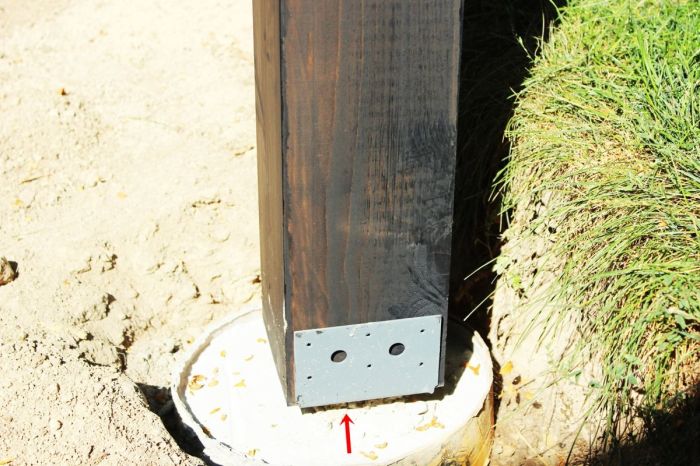
Proper site preparation and foundation design are crucial for the stability and longevity of concrete posts. A well-prepared site ensures the posts are firmly embedded, minimizing the risk of settlement, tilting, or other structural issues. Careful consideration of soil conditions, excavation methods, and foundation types is vital for achieving a robust and durable installation.
Careful planning and execution of site preparation and foundation construction are essential for ensuring the structural integrity of the concrete posts. The soil’s characteristics significantly impact the post’s stability, and selecting the appropriate foundation type is crucial for long-term performance. The choice of foundation should align with the post size, soil type, and intended load.
Site Excavation and Leveling
Excavation for post foundations involves careful removal of soil to the required depth. Precise leveling is paramount to ensure the foundation sits at the correct elevation. This process involves using surveying tools and leveling equipment to achieve a precise and consistent foundation depth across the entire installation area. Variations in soil levels can lead to uneven settling, compromising the post’s stability. A leveled surface ensures that the posts are consistently supported and aligned.
Soil Compaction
Adequate soil compaction is vital for post stability. Compaction reduces the air voids within the soil, increasing its density and load-bearing capacity. This process, typically accomplished using heavy machinery like compactors, minimizes the potential for post settlement or movement over time. Proper compaction significantly contributes to the post’s long-term structural integrity, preventing issues like tilting or leaning. In soft or loose soils, meticulous compaction is essential to prevent post movement.
Soil Type Comparison
The characteristics of the soil directly influence the design of the post foundation. Different soil types exhibit varying levels of stability and load-bearing capacity.
| Soil Type | Description | Implications for Post Setting |
|---|---|---|
| Clay | Often sticky and cohesive; can be difficult to excavate and compact; prone to shrinkage and swelling | Requires careful excavation, thorough compaction, and potentially larger foundations to compensate for potential soil movement. |
| Sand | Loose and granular; readily compacts but can settle unevenly; may require a more substantial foundation. | Effective compaction is crucial; consider using gravel or concrete footings for increased stability. |
| Silt | Intermediate properties between clay and sand; can be problematic due to its tendency to become waterlogged | Requires careful consideration of moisture content; often requires additional drainage measures and potentially a reinforced foundation. |
| Gravel | Well-drained and stable; good load-bearing capacity | Offers excellent support for posts; often requires less extensive foundation preparation. |
Foundation Options
Various foundation options cater to different soil conditions and post requirements. The chosen method should align with the soil type, post size, and anticipated load.
- Trenching: A trench is excavated around the post’s base to the required depth. Concrete is then poured into the trench to form the foundation. This method is suitable for a variety of soil conditions and post sizes, but it may not be suitable for posts with large loads.
- Footings: A concrete footing is constructed beneath the post base, extending beyond the post’s perimeter. This method provides enhanced stability and load distribution, particularly suitable for posts with high loads or in challenging soil conditions. Footings can be square, rectangular, or other shapes, tailored to the post size and load requirements.
- Gravel Beds: A layer of gravel is placed at the base of the post to provide drainage and support. This method is effective in areas with poor drainage or unstable soils, but it may not be sufficient for posts subjected to heavy loads.
Foundation Design Examples
Foundation design must be tailored to the specific soil conditions and post dimensions.
- Example 1 (Clay Soil): For a 4-inch diameter post in clay soil, a trench method with a reinforced footing might be recommended. The footing should be significantly wider than the post base to distribute the load effectively and prevent tilting. The trench must be carefully compacted and the concrete should be reinforced with rebar.
- Example 2 (Sand Soil): A 6-inch diameter post in sandy soil may benefit from a concrete footing. The footing should be wider and deeper than the post base to accommodate the potential for uneven settlement in the sand. Compaction of the surrounding sand is critical to the footing’s stability.
Forms for Foundations
The use of appropriate forms is essential for achieving the desired foundation shape and dimensions. Properly constructed forms ensure the concrete is poured and cured in the intended shape, leading to a structurally sound foundation. Forms must be sturdy enough to withstand the weight of the wet concrete and prevent deformation. The choice of form material (wood, metal, etc.) should be aligned with the dimensions of the foundation and the project’s specific needs.
Concrete Mix and Pouring
Proper concrete mixing and pouring is crucial for ensuring the structural integrity and longevity of your concrete posts. A well-executed process guarantees a strong, durable foundation that resists weathering and stress over time. This section details the ideal concrete mix, preparation procedures, curing methods, and pouring techniques to achieve optimal results.
The quality of the concrete mix directly impacts the strength and durability of the finished posts. A carefully measured and thoroughly mixed concrete will result in a strong and uniform product. Following the guidelines below will help you achieve this.
Ideal Concrete Mix Ratio
The optimal concrete mix ratio for setting posts depends on the specific requirements of the project, such as the size of the post, the load it will bear, and the environmental conditions. A typical mix ratio for posts supporting moderate loads in average conditions is 1 part cement, 2 parts sand, and 3 parts gravel. This ratio provides a balance between strength and workability. However, adjustments may be necessary based on the specific project needs and local conditions.
Concrete Mix Preparation
Thorough preparation of the concrete mix is essential for achieving the desired strength and consistency. Following a systematic approach ensures a uniform and high-quality concrete mix.
- Material Measurement: Precisely measure the cement, sand, and gravel using calibrated tools. Use a wheelbarrow and a measuring container or a concrete mixer to ensure accurate amounts. Consistency in measurements is paramount. Errors in measurement can directly affect the overall strength of the concrete.
- Mixing Techniques: Begin by mixing the aggregate (sand and gravel) thoroughly. Then gradually add the cement and continue mixing until a uniform consistency is achieved. If using a concrete mixer, follow the manufacturer’s instructions for optimal mixing times. Adequate mixing ensures the cement particles are uniformly distributed within the aggregate, maximizing the concrete’s strength. For smaller projects, a hand-held mixer or a shovel and a wheelbarrow can be used for mixing. The mixing time should be sufficient to create a homogenous mix, free of lumps.
Concrete Curing
Proper curing is vital for allowing the concrete to harden and develop its full strength. It essentially helps the concrete to hydrate fully, leading to a stronger, more durable structure.
- Importance of Curing: Concrete curing involves maintaining a moist environment around the concrete for a specific period. This process allows the chemical reactions within the concrete to continue, resulting in the concrete hardening and developing its maximum strength. Without proper curing, the concrete may not reach its designed strength, making it vulnerable to cracking or damage.
- Methods of Curing: Several methods can be employed to ensure proper curing. Covering the concrete with plastic sheeting or damp burlap and keeping it moist with water is a common approach. Special curing compounds can also be used to accelerate and enhance the curing process. These methods help retain moisture and promote hydration, allowing the concrete to develop its full strength and resistance to weathering.
Pouring Concrete
Pouring concrete into the prepared foundation requires careful attention to detail to ensure proper distribution and avoid voids.
- Pouring Procedure: Pour the concrete slowly and evenly into the foundation, ensuring a consistent flow. Avoid creating gaps or voids by ensuring a continuous flow of concrete. Use a shovel or a concrete trowel to distribute the concrete evenly and remove any trapped air bubbles. This is crucial for maintaining the structural integrity of the posts.
- Avoiding Voids: Vigorous mixing helps to reduce air bubbles. However, additional measures are necessary to ensure complete elimination. Use a vibrating tool to consolidate the concrete and eliminate trapped air pockets. This step helps to ensure a dense and uniform concrete mix, minimizing the risk of voids and weak spots.
Common Mistakes to Avoid
Avoiding common mistakes during concrete pouring can save time and resources and improve the final result.
- Inadequate Mixing: Insufficient mixing can lead to uneven distribution of materials, impacting the concrete’s strength. Ensure thorough mixing to ensure uniformity.
- Insufficient Curing: Insufficient curing will result in weaker concrete, making it more susceptible to cracking. Adequate curing is essential to develop the full strength of the concrete.
- Pouring Too Quickly: Pouring too quickly can result in uneven distribution and the formation of voids. Pouring the concrete slowly and evenly helps to maintain the desired consistency.
Post Reinforcement and Placement
Reinforcing concrete posts enhances their structural integrity, preventing cracking and ensuring stability under load. Proper reinforcement placement is crucial for the longevity and reliability of the structure. This section details the different reinforcement types, securing methods, and alignment techniques for successful post setting.
Reinforcement in concrete posts is a critical element that directly impacts the post’s ability to withstand stress and maintain its shape. Careful consideration of reinforcement type, placement, and alignment is essential for achieving a robust and durable structure.
Reinforcement Options
Different reinforcement materials offer varying degrees of strength and ductility. Choosing the appropriate material depends on the anticipated load and environmental conditions. Common options include steel rebar, wire mesh, and fabric reinforcement. Steel rebar is a popular choice due to its high tensile strength, while wire mesh and fabric reinforcement are suitable for lighter loads and provide good distribution of stress.
Securing Reinforcement
Ensuring the reinforcement is properly embedded within the concrete mix is essential for achieving the desired strength and preventing slippage. Techniques for securing reinforcement include proper spacing, concrete cover, and ensuring adequate concrete encasement around the reinforcement. The reinforcement should be placed in the concrete mix in such a way that it is evenly distributed and adequately supported. Sufficient concrete cover around the reinforcement prevents corrosion and protects the reinforcement from environmental elements.
Alignment and Leveling Techniques
Precise alignment and leveling are crucial for ensuring the posts stand upright and maintain stability. Incorrect alignment can lead to uneven settlement and structural issues over time. Using a plumb bob and level ensures accurate vertical alignment. Using temporary bracing or supports during concrete curing further stabilizes the posts. Precise leveling is critical for the posts to remain stable during the curing process and over the life of the structure.
Comparison of Reinforcement Materials
| Material | Benefits | Drawbacks |
|—|—|—|
| Steel Rebar | High tensile strength, readily available, good ductility | Can rust if not protected, can be more expensive than other options |
| Wire Mesh | Cost-effective, good distribution of stress | Lower tensile strength than rebar, may not be suitable for high-load applications |
| Fabric Reinforcement | Lightweight, easy to install | Lower tensile strength than rebar, may require more concrete cover for protection |
Proper alignment of the posts is vital for the overall structural stability of the entire system. Misaligned posts can lead to uneven stress distribution, potentially compromising the structural integrity of the entire project.
Step-by-Step Post Placement Guide
- Prepare the foundation according to the established plans. Ensure the foundation is level and stable to support the post.
- Position the reinforcement in the foundation. Ensure it is centered and secured in the prepared area.
- Carefully pour the concrete mix into the prepared foundation, ensuring the reinforcement is completely encased in the concrete. This step is crucial for achieving the desired strength and durability.
- Maintain a consistent concrete level around the reinforcement during pouring to ensure proper alignment.
- Use a level to check the vertical alignment of the post as the concrete sets.
- After the concrete has cured, remove any temporary supports or bracing, ensuring the post remains stable.
Curing and Finishing: How To Set Posts In Concrete
Proper curing and finishing procedures are crucial for the long-term durability and aesthetic appeal of concrete posts. These steps ensure the concrete develops its full strength and resists weathering, extending the life of the structure. Careful attention to detail during this stage is essential to achieving a high-quality finished product.
Thorough curing is essential to ensure the concrete develops its full strength and resists cracking or damage. Curing methods and practices must be adapted to the specific environmental conditions and the desired aesthetic finish. This ensures the concrete achieves its designed strength and longevity.
Importance of Proper Curing Procedures
Concrete gains strength through a process of hydration, where water reacts with the cement. This reaction requires a consistent moisture environment for several days after pouring. Improper curing can lead to premature cracking, reduced strength, and susceptibility to weathering, potentially requiring costly repairs. Maintaining a humid environment helps the chemical reactions occur at their optimum rate.
Various Curing Methods and Effectiveness
Several methods can be employed to maintain moisture around the concrete. Each method offers varying degrees of effectiveness depending on the specific conditions.
- Wet Covering: This method involves covering the concrete with damp burlap, plastic sheeting, or similar materials to retain moisture. This is a common and effective method, especially in dry climates. Consistent moisture is critical for hydration.
- Water Spraying: Regularly spraying the concrete surface with water helps maintain moisture levels, particularly in hot or windy conditions. Careful attention should be paid to avoiding excessive water accumulation that can lead to runoff or staining.
- Membrane Curing: Applying a curing compound creates a moisture-retentive barrier that helps to control the rate of evaporation. These compounds are available in various forms, including liquids and sprays, and can be applied to the concrete surface.
Maintaining Moisture Levels During Curing
Maintaining the right moisture level is paramount for proper concrete curing. It directly affects the concrete’s strength development and durability. The moisture content should be consistent, not allowing for sudden shifts that can create stress.
- Monitoring Conditions: Regularly monitoring the weather conditions, particularly temperature and humidity, is essential to adjusting the curing methods. Dry conditions necessitate more frequent watering, while humid conditions may require less intervention.
- Protecting from Evaporation: Covering the concrete with tarps or plastic sheets can help minimize evaporation, especially during hot and windy weather. The cover should be properly secured to prevent air from circulating underneath and causing uneven drying.
- Using Moisture-Retentive Materials: Utilizing curing compounds or moisture-retentive coverings helps maintain consistent moisture levels throughout the curing period, crucial for optimal strength development.
Protecting Concrete from the Elements During Curing
Protecting the concrete from the elements is essential during the curing period to prevent damage and ensure proper strength development.
- Weather Protection: Covering the concrete to shield it from rain, snow, or excessive sunlight is essential. Adequate protection is particularly important in areas with fluctuating temperatures and significant rainfall.
- Wind Protection: Strong winds can accelerate evaporation, leading to uneven drying. Providing wind protection will help maintain consistent moisture.
- Extreme Temperature Management: Protecting concrete from extreme temperatures is vital. High temperatures can lead to rapid drying, while low temperatures can slow down the curing process. Appropriate measures must be taken to mitigate these effects.
Tools and Techniques for Finishing Concrete Surfaces
Finishing techniques are applied after the concrete has cured to the required strength and moisture content.
- Texturing: Various texturing tools, including trowels, floats, and brushes, can be used to create a variety of finishes. These tools create different textures, from smooth to rough, which influences the overall aesthetic appeal.
- Coloring: Concrete can be colored during the mixing stage, adding a desired aesthetic or visual appeal. The coloring agent needs to be compatible with the concrete mix design to ensure proper integration and long-term color retention.
- Polishing: Polishing the concrete surface enhances its durability and creates a glossy or high-shine finish. This process typically involves specialized equipment to grind and polish the concrete to a high sheen.
Examples of Different Finishing Techniques and Their Aesthetic Appeal
Different finishing techniques offer varied aesthetic appeal, impacting the overall appearance of the concrete post.
- Smooth Finish: This finish provides a clean, polished look, ideal for modern designs. The finish creates a sleek and modern aesthetic.
- Stamped Finish: This technique involves using stamps to create patterns or textures in the concrete surface, which can be used to replicate stone or brick patterns. This method adds an artistic flair and customizability.
- Textured Finish: Textured finishes, such as aggregate or broom finishes, create a rugged or rustic aesthetic. This approach is suitable for designs that incorporate a more natural or industrial look.
Post Installation and Inspection
Proper post installation and meticulous inspection are crucial for ensuring the structural integrity and longevity of concrete posts. Careful alignment and thorough checks prevent future issues and maintain the intended aesthetic appeal. This section details the procedure for final post installation, alignment checks, and a comprehensive inspection checklist to guarantee a high-quality installation.
Final Post Installation Procedure, How to set posts in concrete
The final installation phase involves securing the posts firmly into their foundations. This includes confirming the proper depth and level of the post in the foundation. After the concrete has cured, carefully remove any forms or temporary supports. A final visual check for any signs of settling or damage is essential before proceeding.
Alignment Checks
Precise alignment is vital for the structural stability and aesthetic appeal of the posts. Using a plumb bob or level, verify that each post is vertical and aligned with the intended position. Measure the distance between posts to confirm that they are spaced correctly according to the design specifications. Deviations from the specified alignment must be corrected before proceeding to the next step. Discrepancies can be addressed through adjusting the post or the surrounding soil.
Inspection Checklist for Completed Concrete Posts
A thorough inspection checklist is critical for identifying potential defects or installation issues. The checklist should cover critical aspects like:
- Visual Inspection: Inspect the posts for any cracks, chips, or other surface imperfections. Assess the concrete’s surface for smoothness and evenness.
- Foundation Integrity: Verify that the foundation is intact and that there are no signs of settling or damage to the surrounding soil. Look for proper curing of the concrete in the foundation.
- Alignment Verification: Utilize a level or plumb bob to ensure the posts are vertical and aligned with the intended position. Measure the distances between the posts to confirm adherence to design specifications.
- Reinforcement Inspection: Check the reinforcement bars for proper placement and secure connection with the concrete.
- Post Stability: Examine the posts for any signs of movement or instability. Gently tap on the post to assess its firmness.
- Surface Finish: Inspect the finished surface for uniformity and quality. Ensure there are no noticeable imperfections.
Post-Installation Maintenance and Inspection
Routine maintenance and inspection are essential for long-term post performance. Regular visual checks can help detect early signs of deterioration or damage, allowing for timely repairs. Post-installation maintenance and inspection schedules should be developed based on the anticipated environmental conditions and the specific application of the posts. For instance, posts exposed to harsh weather or heavy traffic require more frequent inspections.
Potential Issues During Post Installation and Their Solutions
The following table Artikels potential issues that can arise during post installation and provides corresponding solutions.
| Issue | Solution |
|---|---|
| Post settling after curing | Re-evaluate the foundation strength, ensuring adequate support. If necessary, reinforce the foundation and re-install the post. |
| Cracks in the concrete post | Identify the cause of the cracks (e.g., improper curing, insufficient reinforcement). Repair the cracks with appropriate concrete patching materials, taking care to address the underlying issue. |
| Post misalignment | Correct the misalignment by adjusting the post or the surrounding soil to achieve the correct alignment. |
| Uneven concrete surface | Ensure proper vibration and consolidation of the concrete during pouring to avoid surface irregularities. |
| Foundation settling | Ensure that the soil supporting the foundation is stable and adequately compacted. Consider using geotextiles or other stabilization methods if necessary. |
Successful Post Installation Projects
Numerous successful projects demonstrate the effective application of concrete post installation techniques. Examples include residential landscaping projects, commercial signage installations, and agricultural support structures. Each project highlights the importance of careful planning, precise execution, and rigorous quality control throughout the installation process.
Final Summary
In conclusion, setting posts in concrete requires careful attention to detail at every stage, from site preparation to final inspection. By following the steps Artikeld in this guide, you can achieve a structurally sound and aesthetically pleasing result. Remember to prioritize proper curing and maintenance to maximize the longevity of your concrete posts. This comprehensive guide serves as a valuable resource for anyone undertaking this crucial construction task.